
2017 orca behavior study
By Rob Williams, Erin Ashe, Scott Veirs & Val Veirs
Latest news:
- Sperm whale echolocation clicks heard 50 kilometers away within the Salish Sea? (4/26/2018) by Scott Veirs
- Synopsis of raw data: behavioral, acoustic, & AIS (ship tracking) (12/6/2017) by Scott Veirs
- Theodolite tracks of ships and killer whales (9/22/2017) by Natalie Mastick
- Tracking southern resident killer whales among different combinations of boats and ships (9/6/2017) by Laura Bogaard
- Second week highlight: welcoming home the southern resident killer whales! (9/4/2017) by Laurel Yruretagoyena
Introduction
How do southern resident killer whales (SRKWs) respond to noise from ships and boats — like these examples?
Will their behavior change when vessels voluntarily slow down in Haro Strait (Aug 7 – Oct 6, 2017), a management action which is expected to reduce peak noise levels, but also decrease quiet time?
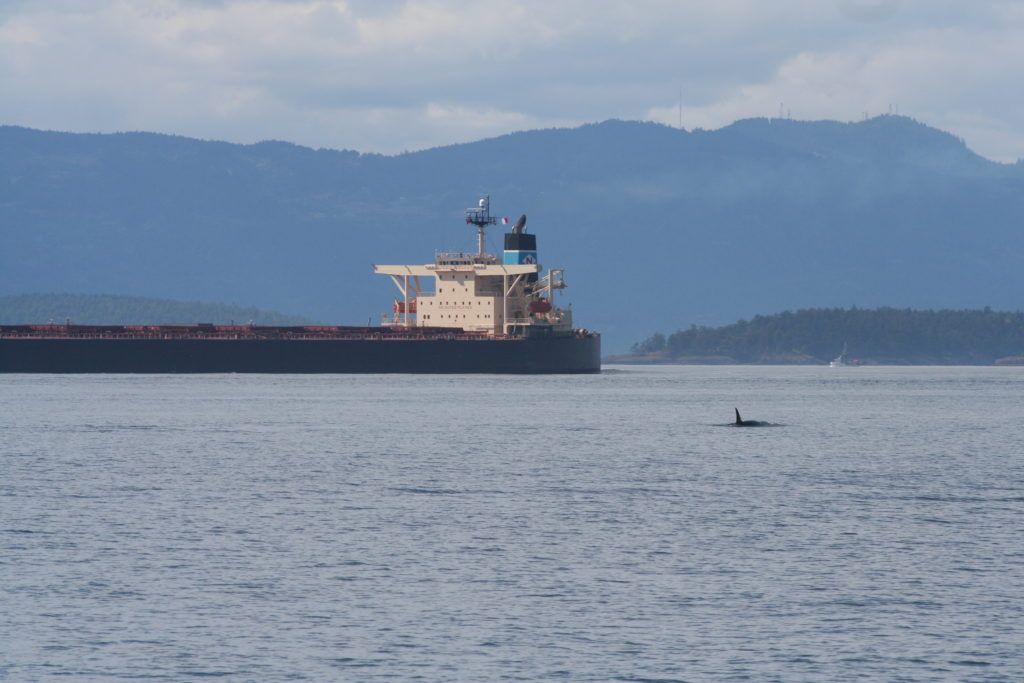
An oil tanker and southern resident orca pass each other in Haro Strait.
Goals of the study:
Observe SRKW behavior from land and with passive acoustics during a portion of the vessel slow down planned by the Port of Vancouver. Quantify SRKW surface behavior and distributions relative to vessels using proven techniques (e.g. theodolites) and compare the results with other methods (e.g. fixed video/still cameras). Monitor underwater noise levels and SRKW acoustic behavior using calibrated Orcasound hydrophones.
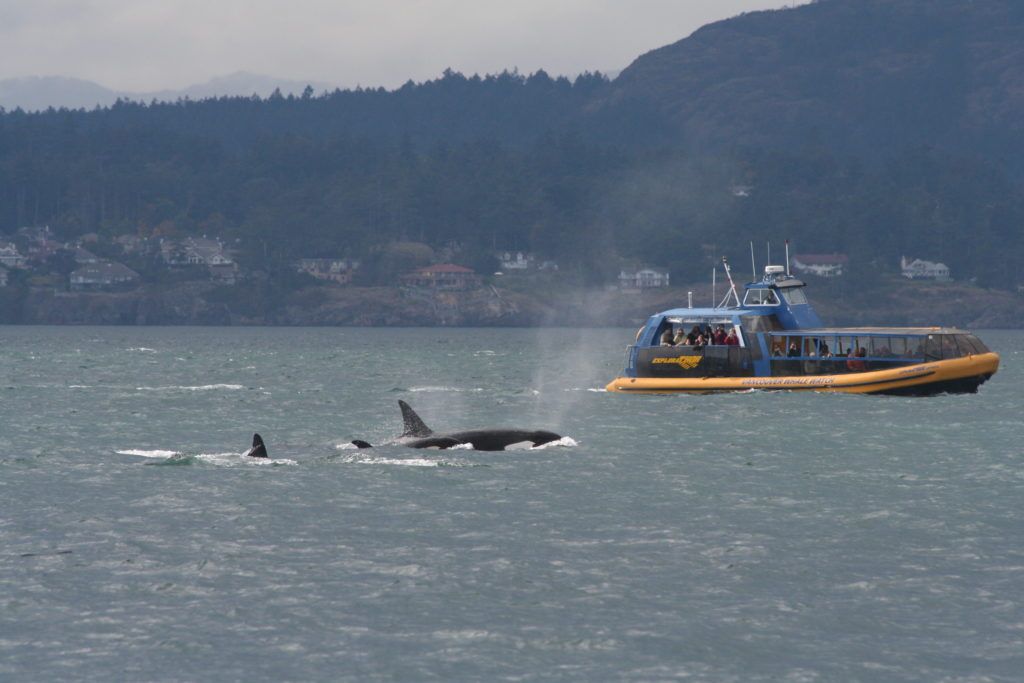
In addition to ships (vessels >20m length), all types of boats have also been asked to participate in the slow-down trial, including commercial and recreational whale watchers.
Leadership:
Rob Williams and Erin Ashe of Oceans Initiative will lead the land-based surface behavioral study, including organizing and training the theodolite team. Val Veirs and Scott Veirs of Beam Reach will lead the acoustic parts of the study, including deploying cabled, near-shore hydrophones and measuring received levels.
Funding:
The data acquisition of this project is funded by U.S.-based donors Christina Koons and Frank Greer and Stephanie Solien who are concerned about the impacts of noise pollution on wildlife in the Pacific Northwest. The project is coordinating with but financially-independent from the Port of Vancouver’s ECHO program’s ship slow down trial.
We seek additional funding to support the analysis of the data — both acoustic and behavioral. If you would like to make a tax-deductible donation, please contribute to the “2017 SRKW behavior study” through Oceans Initiative. If you would like to support the project an any other way, don’t hesitate to contact scott@beamreach.org .
Study site map:
The theodolite team plans to monitor a northern site near Snug Harbor (where both ship and boat traffic is intense and nearby), a central site near Lime Kiln, and possibly a third site near the south end of San Juan Island where the busiest shipping lanes are almost 10x further away.
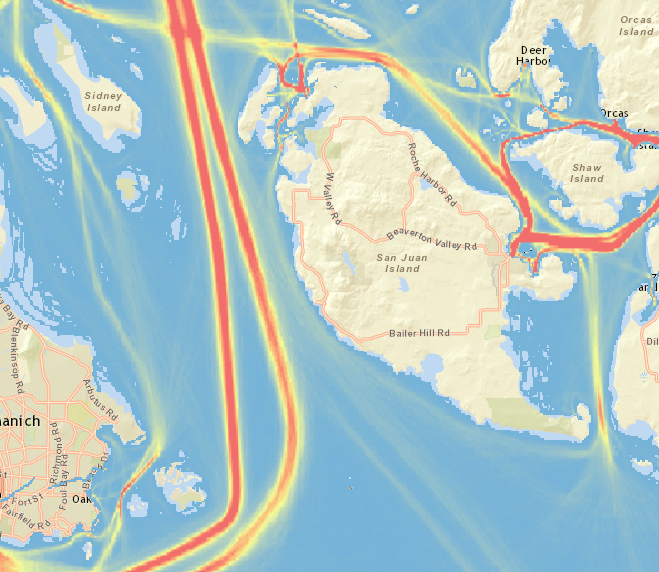
Map of ship traffic density within Haro Strait during 2012. [Credit: NOAA National Viewer]
Methods and background:
We are using land-based theodolites and cameras to measure SRKW surface behavior, as well as vessel distributions during the slow down. Visual results will be compared with acoustic observations made by the Orcasound hydrophone network of received ship noise levels and SRKW acoustic behavior.
The ECHO (Enhancing Cetacean Habitat and Observation) program is aware of these studies, and encourages other organizations to use this unique opportunity to conduct additional research projects. The ECHO program and its contractors (including our colleagues Drs. Jason Wood and Dom Tollit of SMRU Consulting, and JASCO) are monitoring ship noise levels and ambient noise levels in central Haro Strait during the slow down and vocal activity of SRKWs at Lime Kiln. They have modeled potential noise impacts on SRKWs, and will validate models post-trial, but are not measuring SRKW surface behavior. They are, however, logging SRKW IDs, direction of travel, and timing.
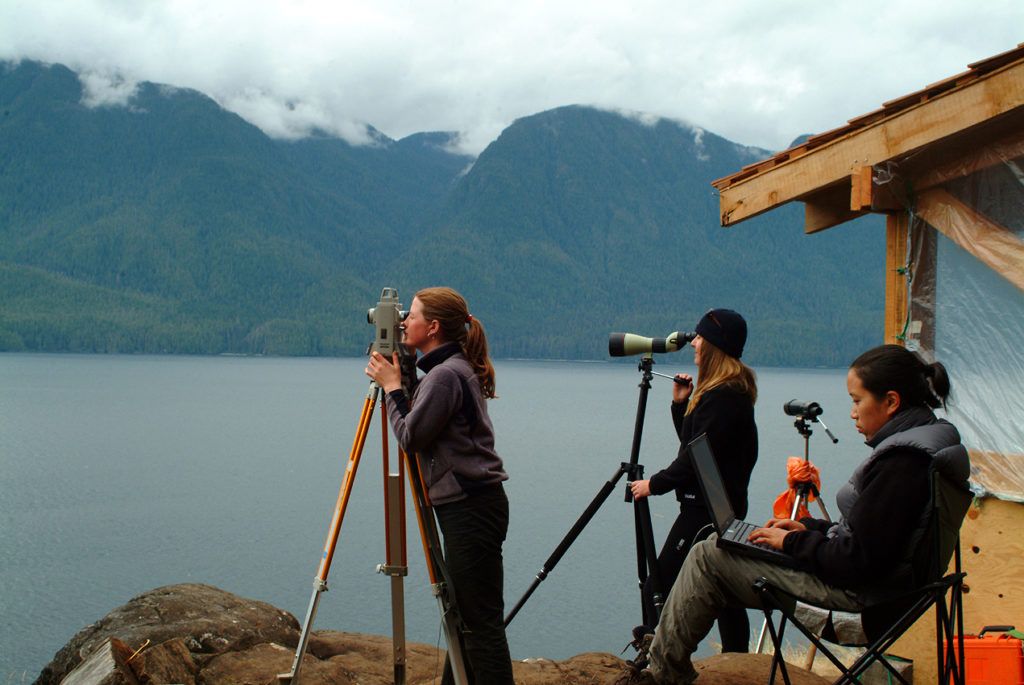
Erin Ashe operating a theodolite with her team studying northern resident killer whales in Johnstone Strait.
Comments
Archived from the original website. New comments aren't accepted here.

robert
August 15, 2017thank you

Gina Johnson
September 9, 2017Very happy about this study and look forward to results. Thank you.

athena
September 9, 2017yay!!! love the wildlife! anything to help them thrive! thank you!!

Kaleigh
September 14, 2017I am very intrigued by this study! Please keep up your work!

Shana Segarra
December 15, 2017Can’t wait to see results