Volunteer
Citizen Scientist
First and foremost, you can volunteer as a citizen scientist. Not only can you listen for whales to marvel at the symphony of sounds they make, but also you can listen *for* whales — helping to monitor their habitat and notifying the network when you hear them or a noise that could endanger them.
In Person
You can also volunteer in-person with any of the current Orcasound network members, or with a new organization in your neighborhood that you convince to become a new member. Volunteer opportunities can include helping deploy or fix hydrophones, teaching groups how to “listen for whales,” or helping create a new educational or outreach project.
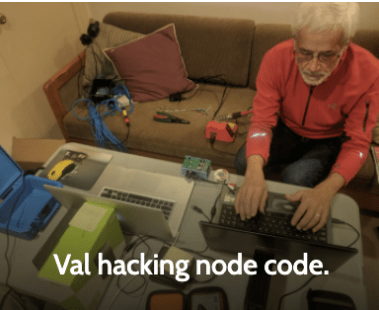
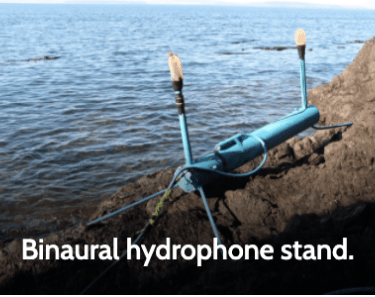
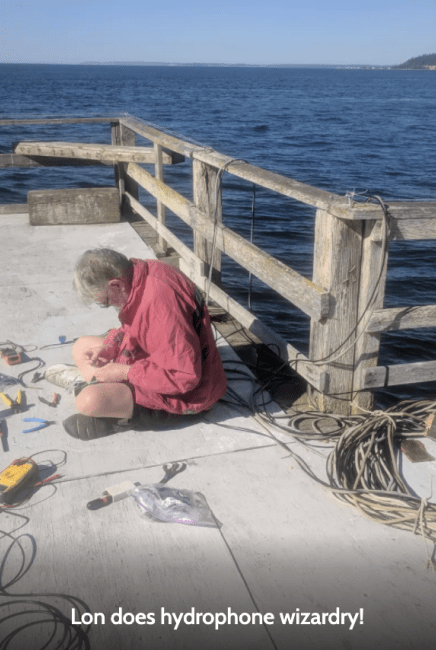
Volunteers are currently helping Orcasound take huge strides forward. Orca Network volunteers recently deployed a new hydrophone node at Bush Point and built an amazing ocean listening exhibit in Langley out of an antique telephone booth. At the Port Townsend Marine Science Center, volunteers are refurbishing hydrophones and installing new computer equipment to bring their node back online. At educational nodes, volunteers teach the public about acoustic ecology and ocean noise pollution using Orcasound recordings, live audio, and other data products.
Developers
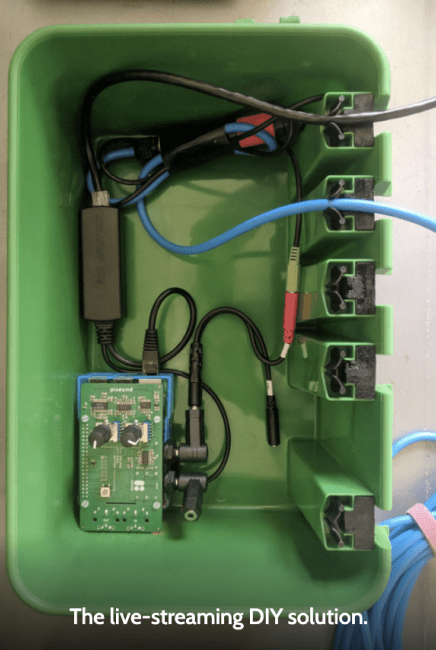
A growing team of volunteer developers and talented consultants are building and improving Orcasound. Some are developing the open-source software that captures and conveys ocean sounds. Others are pioneering the DIY, low-cost hydrophone and computer hardware that allows humans to listen to marine soundscapes in more and more places.
Orcasound Web App
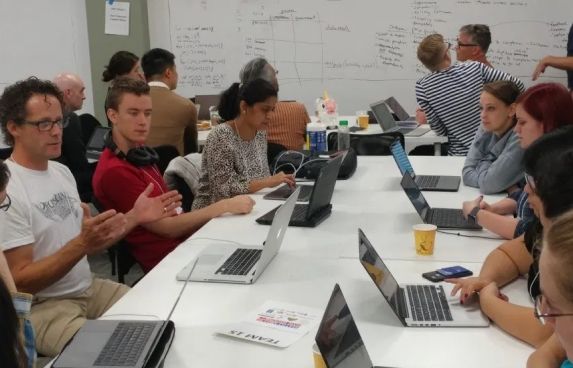
DemocracyLab Hackathon
Our crowning jewel is the Orcasound web app — a suite of new cloud- and browser-based ways for citizen scientists and artificial intelligence to listen for whales in real-time. As of April, 2020, this is the Orcasound tech stack:
- Orcanode: Linux-based ADC with live-streaming
- Bush Point & Port Townsend: ffmpeg+s3fs in a bash script
- Orcasound Lab: testing new Python script using ffmpeg+boto+/-redis
- Orcasite: front- and back-end of the Orcasound app
- backend is an Elixir app using the Phoenix framework.
- the Phoenix app serves a React app
- Public site — live.orcasound.net
Current Roadmap
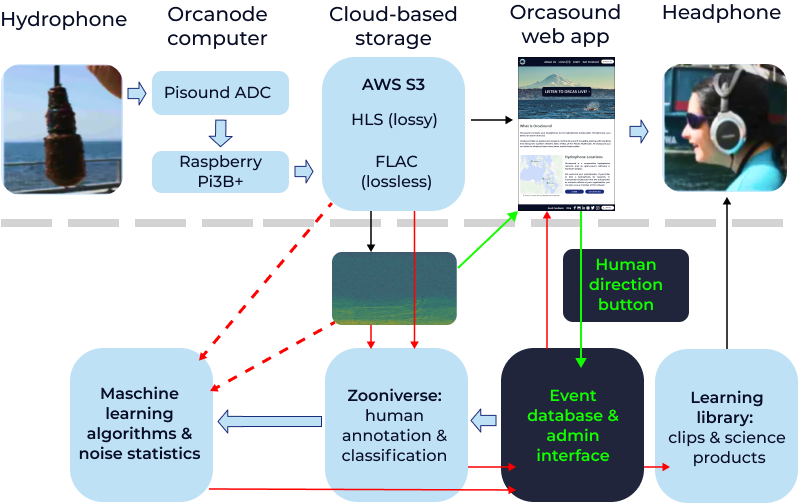
From hydrophone to headphone, this is how we intend to deliver an ocean of sound! 2020 Roadmap: components above the gray dashed line launched November 1, 2018; green features are being beta-tested since November 2019; red features are in development or requested. Click to view expanded image.
If you’re based in the Pacific Northwest, you can work with Orcasound in-person at a hackathon (see the Orcasound project at DemocracyLab). No matter where you are, you can find out how to volunteer with us by going to our GitHub page and subscribe to the Orcasound dev email distribution list to find a place to contribute your talents. We hope you will share your expertise and innovations with us, and maybe even earn your way into the Orcasound Hacker Hall of Fame!
Join the network
Memorandum Of Agreement
The real-time audio streams, citizen science projects, educational materials, and outreach projects of Orcasound are brought to you by the current network members, listed below, who have e-signed the 2021-2025 Memorandum of Agreement (MOA). Any organization or individual is welcome to join the network (for free!), either as the host of a hydrophone node, a researcher or citizen scientist, an educator/activist, or a general volunteer.
If you're an individual wanting to volunteer, collaborate, or donate, check out the many ways you can support Orcasound. Everyone can listen for whales, and learn the diverse sounds of the Salish Sea.
If you're an organization wanting to join the network as the host of a new hydrophone node, an educational/outreach node, or both — just read the history, mission, and vision of the network, e-sign the MOA, and then email info@orcasound.net to begin collaborating. There are no membership fees — just benefits, roles, and responsibilities.
For Member Organizations & Individuals (1/2021-12/2025)
Orcasound is an International cooperative partnership with a long history and clear vision of collaboration between hydrophone, educational, and research nodes. The primary goal of Orcasound is to help conserve the endangered Southern Resident Killer Whales (SRKWs) while also monitoring and studying the underwater sounds across their range and educating the public about marine bioacoustics, noise pollution, and marine sustainability. The Network maintains a data archive and an equipment pool for its members. It also helps create and maintain open source software for streaming, archiving, and processing live audio data.
With collaborative support of the Network, members establish network node(s) consisting of hydrophone(s), computers and software, power, and an Internet connection, and/or related educational outreach infrastructure. Members then are listed on the Network web site(s) -- orcasound.net and variants -- and are connected with a global community of listeners, researchers, and educators.
- free access to the raw data and data products (e.g. recordings, catalogs) collected with Network hardware/software from all hydrophone nodes;
- shared technological, pedagogical, and outreach innovations and resources (e.g. exhibit graphics and sounds; machine learning training data sets and models);
- technical support from network experts (e.g. calibration, deployment, software);
- access to a shared equipment pool, including calibration equipment;
- freedom to write/administer grants or otherwise raise funds or sign agreements on behalf of the Network for its benefit within the terms of this MOA;
- acknowledgement on and participation in Network websites, apps, press releases, social media, and publications;
- the right to cancel your agreement to this MOA with a 30-day written notification to admin@orcasound.net
- secure and maintain the hydrophone or education/outreach infrastructure at one or more nodes, or contribute to the Orcasound open-source software repositories;
- develop projects that support the goals of the Network;
- for hydrophone nodes, use Orcasound (orcanode) software to provide a free real-time stream of audio data and data products to the Network, without filtering, delay, or censoring;
- maintain any Network hardware & software at your node(s) (e.g. troubleshoot after power outage);
- pay costs associated with powering equipment, Internet access, and streaming at your node;
- share with others -- all data collected by Network hard/software and/or data products and/or educational/outreach resources you develop -- in accordance with the Network’s Attribution-NonCommercial-ShareAlike 4.0 International (CC BY-NC-SA 4.0) license;
- if you leave the Network or alter your node(s), offer any functioning infrastructure to the Network before liquidation or disposal, and transfer any raw data or data products to the Network archives.
I would like to join the network. I agree to enjoy the benefits and accept the responsibilities described in this Memorandum of Agreement.
View the original MOA document (Google Doc)
Current members
21 organizations have agreed to the MOA.
Beam Reach
- Node and role
- Tech support, admin, outreach
- Date joined
Orcasound 1.0
- Node and role
- Orcasound Lab node Tech support
- Date joined

Orca Network
- Node and role
- Whidbey Island node Admin and outreach; Education/outreach, grant-writing
- Date joined

Port Townsend Marine Science Center
- Node and role
- Port Townsend node Admin
- Date joined

Orca Behavior Institute
- Node and role
- Research + Education/outreach
- Date joined
Cetacean Research Technology
- Node and role
- Tech support; hydrophones Puget Sound node?
- Date joined
Whale Scout
- Node and role
- Puget Sound Outreach/Education/Monitoring
- Date joined

Deep Green Wilderness
- Node and role
- Puget Sound+ Outreach/Education/Monitoring
- Date joined
LAB-core System Bioacoustics
- Node and role
- CWR & other nodes Tech support; hydrophones
- Date joined

Friends of Lime Kiln Society (FOLKS)
- Node and role
- Lime Kiln Interpretive Center & Lighthouse, Eagle Point hydrophone? Education, outreach
- Date joined

The Whale Trail
- Node and role
- West coast viewing locations Outreach
- Date joined

Center for Whale Research
- Node and role
- CWR & other nodes Research/Monitoring/Outreach
- Date joined
Oceans Initiative
- Node and role
- Puget Sound+Broughton Archipelago node Research/Monitoring/Outreach
- Date joined
Pacific Mammal Research
- Node and role
- Southeast Rosario node Research/Monitoring/Outreach
- Date joined
International Institute For Critical Studies in Improvisation, Memorial University
- Node and role
- Develop a St. John’s, Newfoundland node. Outreach/Education/Monitoring
- Date joined

Vashon Nature Center
- Node and role
- Education Programs Manager and BeachNET community science coordinator
- Date joined

Sound Action
- Node and role
- Puget Sound - Point Robinson Outreach/Education/Monitoring
- Date joined

Orca Conservancy
- Node and role
- Beach Camp, Sunset Bay node Research, Monitoring, Outreach, Education.
- Date joined

Project SeaWolf
- Node and role
- North Puget Sound Outreach and vessel platform provisioning.
- Date joined
MaST Center
- Node and role
- Redondo Beach node Director, Marine Science & Tech (MaST) Center
- Date joined
The Salish Sea School
- Node and role
- Southeast Rosario node Research/Monitoring/Outreach
- Date joined
Already a member? You can ask us to update, add, or remove a listing.
Support
Help us and our Orcasound network members by making charitable contribution to our partners, many of whom are 501(c)3 organizations Check out the link below to help strengthen and grow our network, while supporting our on-going conservation, research, and educational efforts.
You can also directly support the many dedicated volunteers who help Orcasound keep running and improve over time. Take a look at our Hacker hall of fame and our Github repositories and consider sponsoring the work of our most-dedicated contributors.